The Municipality of Rome has launched one of the most ambitious and impressive fleet renewals in Europe, initiating the energy transition of public transport in two strategic areas of the city: Roma Est and Roma Ovest. The project represents a major shift towards sustainable mobility, with a fleet of over 250 eBuses
Lot 1 – Roma Est: managed by SAP (Società Autolinee Pubbliche) and Autoservizi Troiani
Lot 2 – Roma Ovest: managed by BIS (Bus International Service) and Autoservizi Tuscia
To manage this transition to electric mobility, these operators faced significant challenges, related to charging infrastructure, maintenance and optimised fleet management. Electrifying public transport does not only mean buying electric buses, but creating an integrated ecosystem capable of ensuring continuous operation, efficiency and sustainability.
E-GAP plays a key role in this project. We provide a complete solution through the Fleet-as-a-Service model. This approach allowed SAP, BIS and Tuscia operators to access not only the vehicles, but also an advanced charging infrastructure, an intelligent management system and an integrated maintenance service. In other words, we have removed the operational and financial complexities, allowing operators to focus solely on providing the public transport service.
What we committed to do for SAP, and BIS and Tuscia
We have developed a long-term project to accompany SAP, and BIS and Tuscia in this transformation towards sustainable mobility. The contract with the operators will run for eight years and includes a number of key actions.
To ensure efficiency and reliability, the contract also includes a comprehensive maintenance service, which will cover both the vehicles and the charging infrastructure. To support this management, we have implemented intelligent software to optimise energy consumption and an advanced monitoring and supervision system, which allows remote and on-site control through Automated Vehicle Monitoring (AVM).
Finally, we have introduced energy storage solutions with the installation of second-life batteries, capable of supporting the infrastructure at peak times and reducing dependence on the electricity grid.
This is a concrete commitment to more sustainable, efficient and innovative mobility.
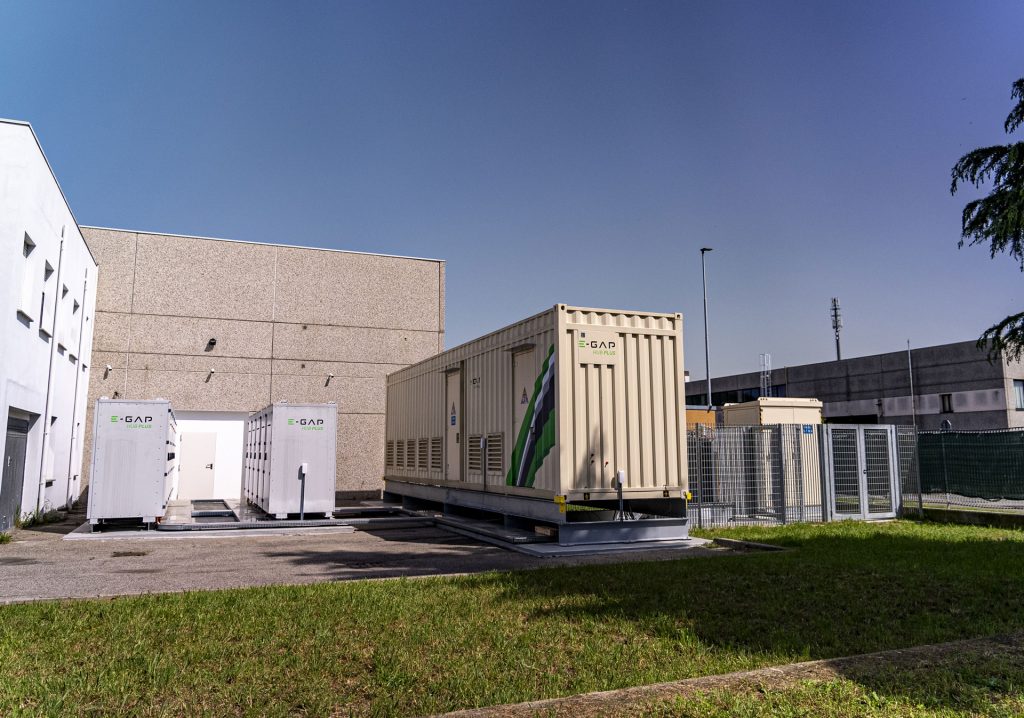
A crucial aspect of the project is the adaptation of the recharging infrastructure, which is essential to ensure the full operation of the electric fleet without impacting the service. To meet this challenge, we have built a state-of-the-art charging infrastructure within the two depots and implemented our proprietary energy storage solution based on second-life batteries, which allows us to
- Provide high-power energy in areas with limited grid availability.
- Reduce infrastructure upgrade costs by avoiding costly grid interventions.
- Ensure business continuity by storing energy at times of lower demand and releasing it at peak times.
This storage system is not just a technological solution, but the result of intensive in-house research and development, in which our engineers have studied the efficient re-use of second-life batteries to reduce the environmental impact and improve the overall sustainability of the project. This approach allows us to continuously innovate, developing systems tailored to the needs of cities and public transport operators, making fleet electrification a concrete and scalable solution.
To ensure the success of the project, we have carefully selected a network of high-level suppliers, choosing partners with consolidated experience and specific expertise in the field of electric mobility. This strategic choice is crucial to ensure reliability, efficiency and innovation at every stage of the initiative.
Through a turnkey model and structured financing, we simplify the transition to e-mobility for operators, enabling them to run an optimised fleet without any upfront costs or operational risks.
The bus electrification project with SAP and BIS and Tuscia is only the beginning of a revolution in urban mobility. This project proves that more sustainable public transport is not only possible, but also efficient and cost-effective, paving the way for a new standard for the cities of the future.