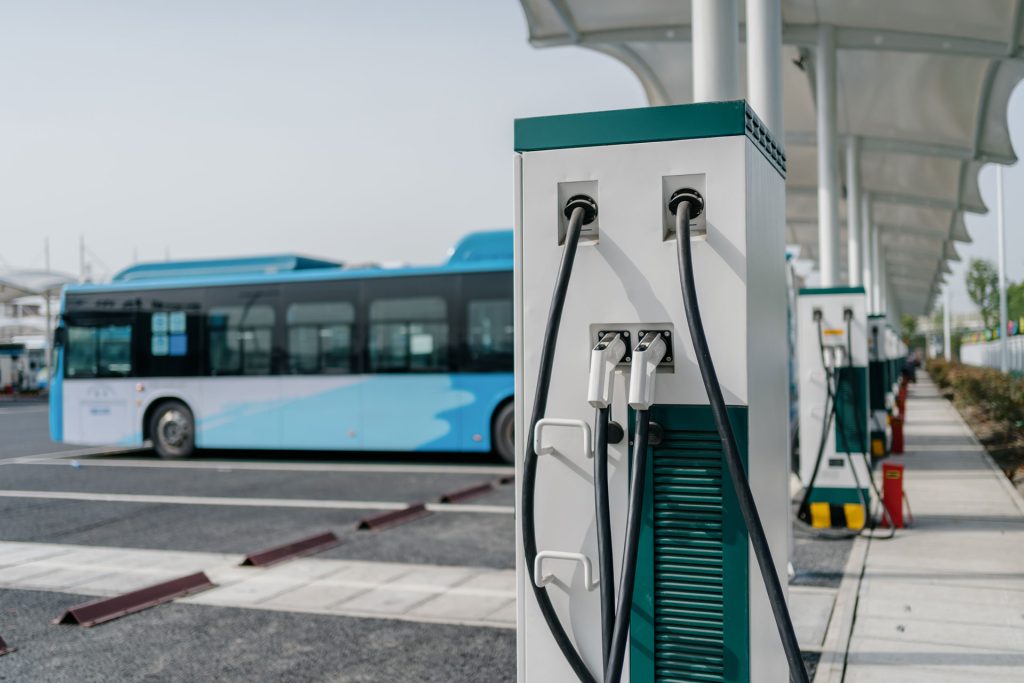
In recent years, the electric bus market has experienced significant growth, driven by the growing urgency to reduce pollutant emissions in urban centres and improve air quality. From European metropolises to North American cities and Asian giants, governments and local administrations are accelerating the transition to (almost) fully electric public transport fleets, thanks to a mix of incentives, stricter regulations and infrastructure investments.
The electric bus (eBus) sector is experiencing unprecedented expansion. According to market forecasts, the number of electric buses in circulation will grow at a compound annual growth rate (CAGR) of more than 20 per cent over the next few years, with increasing penetration in key markets: Europe, Asia and North America in the forefront.
Leading this transformation is China, which alone accounts for around 90% of the global electric bus fleet. However, Europe and North America are rapidly catching up, thanks to increasingly ambitious sustainability policies. In particular, the European Union has set stringent targets for the decarbonisation of public transport, with many countries announcing the phase-out of diesel buses by 2030-2040.
Several key factors are fuelling this race towards electric:
✅ Stricter environmental regulations: many cities are introducing Low Emission Zones (LEZs) and restrictions on the circulation of diesel vehicles, incentivising the shift to eBuses.
✅ Reduced Total Cost of Ownership (TCO): although the initial investment is higher than with endothermic-powered buses, the lower operating and maintenance costs make eBuses more profitable in the long run.
✅ Public support and dedicated funding: governments and international institutions are allocating funds to accelerate the adoption of electric buses and the development of charging infrastructure.
✅ Technological innovation in batteries: increased energy density and improved battery life cycles are making eBuses increasingly efficient and competitive.
The electric bus market is set to play a key role in the energy transition of public transport. With the support of government policies, technological developments and new business models, eBuses will increasingly become a standard solution for cities around the world.